Hibiscus as a Superfood: Where US Manufacturers Source It
Introduction
Hibiscus sabdariffa (commonly known as roselle or Zobo) is considered a superfood because of its dense concentration of anthocyanins, vitamin C, and polyphenols, compounds that have made it one of the fastest-growing botanical ingredients in the global functional foods industry. For decades, hibiscus lived quietly in tea bags and home remedies. Today, it’s showing up in sparkling beverages, natural food dyes, skincare formulations, and supplement lines across the US and Europe, and manufacturers are increasingly asking the same question: “where does the good stuff actually come from?”
This post breaks down what makes hibiscus nutritionally significant, why manufacturers are building it into their formulations, what to look for when sourcing it in bulk, why Nigeria is significant, and specifically why Jaaf Harvest, has become a trusted starting point for that search.
What Makes Hibiscus a Superfood
The “superfood” label gets thrown around loosely, but hibiscus earns it on composition alone. Dried hibiscus calyces are rich in anthocyanins (the deep-red pigments responsible for the flower’s signature ruby color), along with vitamin C, polyphenols, and trace minerals like iron and calcium. These compounds are what give hibiscus its tart, cranberry-like flavor profile and its natural pigmentation strength, two properties that matter as much to a food scientist as any nutritional label.
Hibiscus is classified as a superfood because it delivers a concentrated nutrient and antioxidant profile in a naturally grown, minimally processed form, exactly the kind of ingredient clean-label formulators have been hunting for over the past decade.
This content is for informational purposes only and is not intended as medical advice.
Why Manufacturers Are Sourcing Hibiscus Right Now
The shift toward natural, recognizable ingredients has put hibiscus in an unusually strong position. Beverage brands use it for both flavor and color, replacing synthetic red dyes with a plant-based alternative that consumers can actually pronounce. Tea and infusion companies have used it for years, but the newer demand is coming from functional beverage startups, natural cosmetics brands looking for plant-based pigments and antioxidant actives, and nutraceutical companies building hibiscus into capsules, powders, and extracts. Thus, it has become a sought-after raw material for beverage formulators, nutraceutical brands, and natural-colorant manufacturers across the US and Europe
The global roselle market reflects that momentum: it was valued at roughly $243.3 million in 2024 and is projected to reach $420.0 million by 2030, growing at an estimated 9.5% CAGR. That growth is not happening in a vacuum, it’s being driven by manufacturers actively reformulating around natural ingredients, and it is creating real pressure on supply chains to deliver consistent, traceable, high-quality hibiscus at scale.
Nigeria: The World’s Leading Source
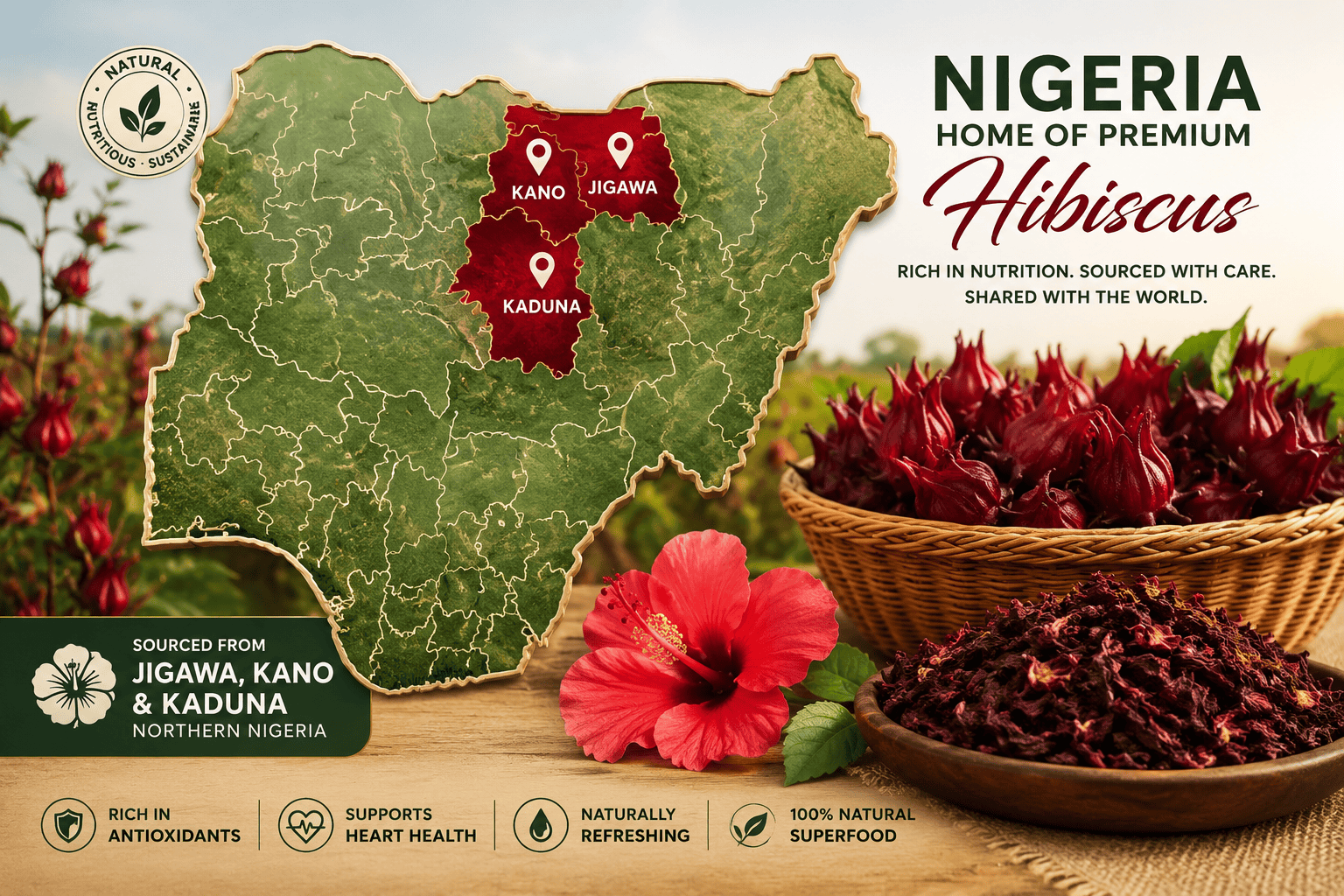
If you trace hibiscus supply chains back far enough, most roads lead to Nigeria. The country is widely recognized as one of the world’s leading producers and exporters of hibiscus, with cultivation concentrated in the northern agricultural belt, states like Jigawa, Kano, and Bauchi, where the climate and soil conditions are almost ideal for the crop.
The scale is not new, either. Nigerian hibiscus exporters have moved serious volume for years and according to the Association of Hibiscus Flower Exporters of Nigeria (AHFEN), Nigeria exported 1,983 containers of hibiscus to Mexico alone in a nine-month stretch in 2017, earning $35 million from that single trade route. Export data referenced through international trade platforms continues to show Nigerian hibiscus reaching Germany, the Netherlands, the UK, the US, Mexico, Japan, and China – a footprint that reflects sustained, not seasonal, demand.
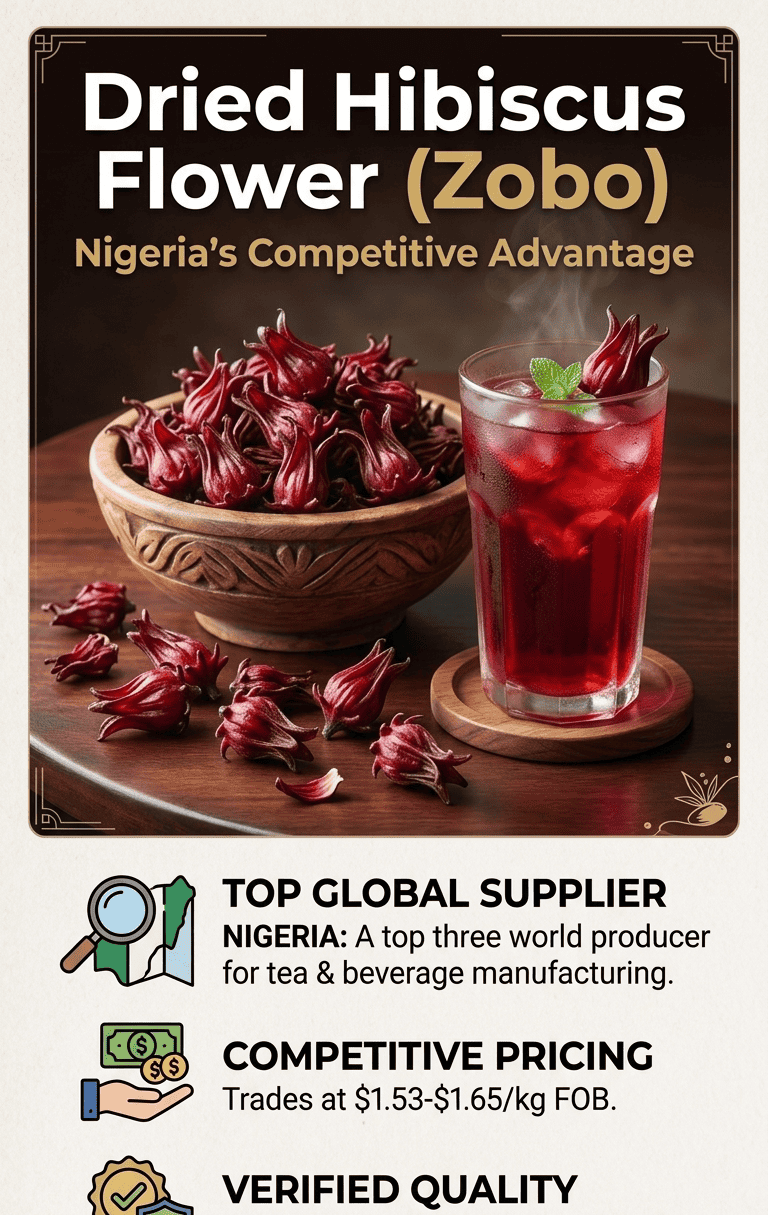
Harvest season typically runs from November through April, and the calyces are hand-picked and sun-dried using methods that have been refined across generations of Nigerian farmers. That combination of favorable growing conditions, deep-rooted agricultural expertise, and established export infrastructure, is why so many manufacturers researching hibiscus sourcing end up looking at Nigeria first.
What to Look for in a Hibiscus Supplier
Not all hibiscus is created equal, and sourcing it in bulk comes with a checklist most buyers only learn the hard way. Before committing to a supplier, manufacturers should be looking at:
- Moisture content: It affects shelf life and processing consistency
- Calyx grading and size: It impacts color yield and end-product appearance
- Color and acidity consistency: Batch-to-batch variation is a common quality complaint
- Testing and documentation: Pesticide residue and heavy metal testing, with certificates of analysis available on request
- Certifications: Organic, food safety, and religious dietary certifications relevant to your market
- Minimum order quantity and lead times: These are especially important for manufacturers testing a new ingredient before scaling up
A supplier that can speak fluently to all of these with not just “yes, we have hibiscus”, is usually the one worth building a long-term relationship with. Read More about choosing a supplier here.
Why Jaaf Harvest
Jaaf Harvest sources directly from Nigeria’s hibiscus-growing regions, working close to verified farms where the crop is cultivated and dried. That proximity to origin is what makes consistency possible, from calyx grading, to moisture control, to batch documentation.
We keep our minimum order quantity low, at just 10kg, specifically so manufacturers can test our hibiscus in their own formulations before committing to a larger order. Our certifications and documentation are available on request, and our team can walk you through packaging options, lead times, and shipping terms for your market.
Frequently Asked Questions
Is hibiscus considered a superfood? Yes. Hibiscus sabdariffa is widely classified as a superfood because of its high concentration of anthocyanins, vitamin C, and polyphenols (compounds associated with antioxidant activity and natural pigmentation).
Why are manufacturers sourcing hibiscus right now? Demand is being driven by the shift toward clean-label, plant-based ingredients. Hibiscus offers natural color, tart flavor, and a recognizable nutrient profile, making it attractive for functional beverages, nutraceuticals, and cosmetics.
What makes hibiscus good for you? Its nutrient density comes from anthocyanins, vitamin C, polyphenols, and trace minerals like iron and calcium, all found in the dried calyx.
Where does the best quality hibiscus come from? Nigeria is widely recognized as one of the world’s leading hibiscus producers and exporters, particularly from its northern growing regions like Jigawa, Kano, and Bauchi.
How do I find a reliable hibiscus supplier for my business? Look for a supplier that can provide documentation on moisture content, calyx grading, testing results, and certifications — not just a quote on price and volume.
What should I look for when buying hibiscus in bulk? Moisture content, calyx grade and size, color and acidity consistency, pesticide and heavy metal testing, relevant certifications, and clear terms on MOQ and lead time.
How is hibiscus used in the food and beverage industry? It’s used as a natural flavoring and coloring agent in teas, functional beverages, food products, and increasingly in nutraceutical and cosmetic formulations.
What’s the minimum order quantity for hibiscus export? At Jaaf Harvest, the minimum order quantity is 10kg, making it accessible for manufacturers who want to test the ingredient before scaling up.
How can I request a hibiscus sample from a supplier? Most suppliers, including Jaaf Harvest, offer sample requests directly through their website or sourcing team. Reach out with your intended use case and target volume to get started.
Request a Hibiscus Sample
See the quality for yourself. Request a 10kg sample and start testing hibiscus in your own formulations.
Contact Our Sourcing Team
Have questions about certifications, lead times, or shipping to your market? Our team is ready to help.