The Retail Shop Owner’s Guide to Stocking African Spices: Sourcing, Merchandising, and Pricing
Introduction
You have been waiting for your spice order for two weeks. Your customers keep asking for ginger. You keep saying, “It’s coming.” Your supplier is not answering your calls.
If this sounds familiar, you are not alone.
Running a grocery, health food shop, or specialty food store is rewarding work. You serve your community. introduce customers to authentic flavors, and create a space where the diaspora feels at home.
But sourcing spices? That is often the hardest part.
Long drives to wholesalers, inconsistent quality, cash flow tied up in inventory you do not need, packaging that looks unprofessional on your shelves are drawing you back but it does not have to be this way. This retail shop owner’s guide shows you exactly how to stock African spices profitably without the headaches.
Table of Contents
- Introduction to the Retail Shop Owner’s Guide
- Why Nigerian Spices? The Opportunity for your shop
- The Top Nigerian Spices Your Customers Are Searching For
- The Problem with Traditional Wholesalers
- What to Look For in a Spice Supplier
- How to Price Spices for Retail Margin
- Visual Merchandising Tips for Spice Displays
- How to Open a Wholesale Account with Jaaf Harvest
- FAQ: Retail Spice Sourcing
Why Nigerian Spices? The Opportunity for Your Shop
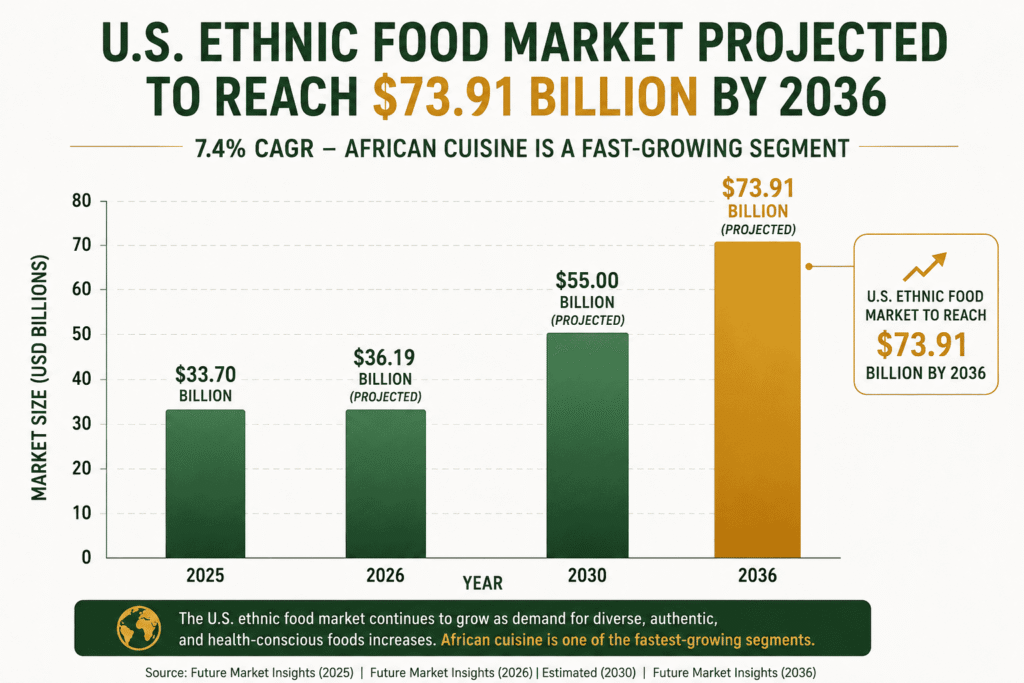
Your customers are already asking for Nigerian spices. The question is “are you stocking them?”
The ethnic food market is growing rapidly. Research shows that 64% of consumers enjoy trying cuisines from other countries (Food Ingredients). The global ethnic food market was valued at $92.76 billion in 2025 and is projected to reach $179.46 billion by 2034, growing at a 7.70% compound annual growth rate (Future Markets Insights), and the U.S. market is a significant driver of that growth.
African cuisine is a fast-growing segment within the ethnic food market. Our “store” is a vibrant mix of local, regional, and global ingredients including ginger, turmeric, and hibiscus (zobo), which are common staples in Nigerian households.
What this means for your shop: Your customers, whether they are Nigerian diaspora, health-conscious shoppers, or culinary adventurers, are actively seeking these products. And they will go to wherever they can find them.
The Top Nigerian Spices Your Customers Are Searching For
You do not need to stock every spice from every African country. Focus on the ones that sell. Here are the three core Nigerian spices your customers are most likely to ask for.
1. Ginger (Ground or Dry Split)
Ginger is the backbone of many Nigerian dishes. It is used in soups, stews, teas, and marinades. Nigerian ginger is known for its strong aroma, high oil content, and pungent flavor.
Why it sells: High demand across all customer segments. It is your highest-turnover item.
Best for: Every shop. Ginger is a universal seasoning that appeals to diaspora customers and mainstream shoppers alike.
2. Turmeric (Ground)
Turmeric has exploded in popularity due to its health benefits such as anti-inflammatory properties, antioxidant content, and its use in golden milk and wellness drinks.
Why it sells: Health-conscious customers actively seek it out. It also has a long shelf life.
Best for: Health-focused shops, shops with wellness customers, or stores looking to attract crossover shoppers.
3. Hibiscus (Dried – Zobo Leaves)
Hibiscus, known locally as zobo, is used to make a popular Nigerian drink. It also adds a deep red color to teas, beverages, and natural food products.
Why it sells: It is versatile because it is used in beverages, teas, and even as a natural food coloring. Customers love the vibrant color and tart flavor.
Best for: Shops with beverage – focused customers, summer seasonal displays, or shops targeting health-conscious consumers.
Note: While you may also stock other African spices (like suya spice, grains of selim, or berbere), these three are your core products. Focus on getting them right before expanding.
The Problem with Traditional Wholesalers
Here is why sourcing spices the traditional way is killing your margin and your sanity.
Problem #1: High Minimum Order Quantities (MOQs)
A typical wholesaler requires you to buy full cases. A case of ginger might be 12 pouches at $3.00 each = $36. For one SKU. If you stock five spices, that is $180.
Plus storage. Plus spoilage. Plus the time you spent driving to pick it up.
Your cash sits on shelves. You are paying rent for inventory that does not sell. By the time you sell through, the spices are past their prime.
Problem #2: Long Drives
You drive two hours to a wholesaler in another city. Spend half a day on the road. You pay for gas, tolls, and wear on your vehicle. And when you arrive? They are out of the one spice you needed.
How much is your time worth?
Problem #3: Ugly Packaging
You receive spices in plain bags. Then you have to repackage, print labels, and hope they look professional. That is labor you should not be doing.
And customers notice. Generic packaging erodes trust. It signals that you do not take quality seriously.
Research confirms that product packaging significantly affects sales performance. In a study of spice sellers, packaging design features had the strongest predictive power for sales, with color being the most influential design attribute. Labeling also enhances credibility through brand and expiry information (Zenodo).
The bottom line: If your spices come in ugly packaging, you are losing sales.
What to Look For in a Spice Supplier
You need more than just a supplier, but a partner who understands your business. Here is what to look for.
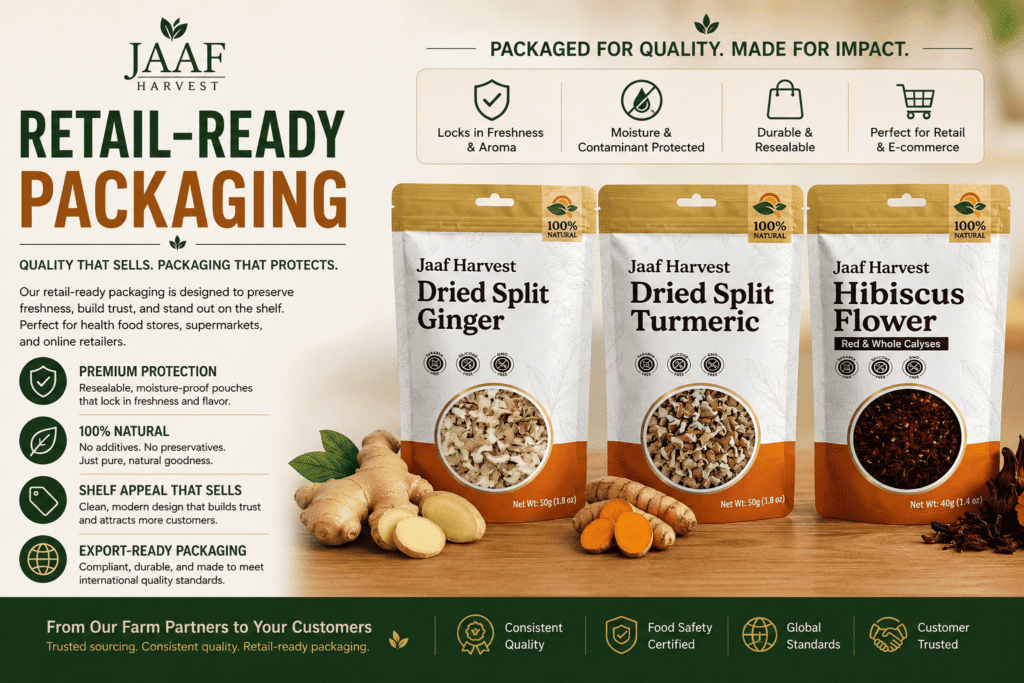
1. Retail-Ready Packaging
Open the box and put it on the shelf. No repackaging, label printing or extra labor.
Why it matters: Saves you time and ensures consistency. Your brand looks professional every time.
2.Low MOQs (10kg Mixed Case)
You should be able to order exactly what you need – not what the wholesaler forces you to buy.
Why it matters: Protects your cash flow. You never overstock. You can test new products without over-committing.
3. DDP Shipping (Delivered Duty Paid)
One price. Your door. No customs headaches.
Why it matters: No freight forwarders, customs bonds, or surprise duties. You focus on your shop, not logistics.
3.FDA-Compliant Labels
Your spices should arrive with proper nutrition labels, ingredient panels, and barcodes.
Why it matters: No regulatory issues. No manual data entry at checkout.
4.Consistent Quality
Every batch should meet the same specifications. No surprises.
Why it matters: Your customers notice when quality changes. Inconsistent spices drive customers away.
Learn More about supplier’s checklist here.
How to Price Spices for Retail Margin

Pricing is simple math. Here is a formula that works for most small shops.
The 60% Rule
Cost per unit ÷ 0.60 = Suggested retail price
Why 60%? That gives you a 40% gross margin – enough to cover rent, labor, and other costs while staying competitive.
Example:
- You buy a 4oz pouch of ground ginger for $3.00 wholesale
- $3.00 ÷ 0.60 = $5.00 suggested retail price
- Your gross profit: $2.00 per unit
Pro tip: For high-turn items like ginger, you can price at $4.50 (33% margin) to drive volume. While for slower items like cloves, price at $5.50 (45% margin) to protect against waste.
How to Use This Formula in Your Shop
- Download the Retail Margin Calculator
- Enter your wholesale cost for each product
- Enter your target margin (30-50%)
- The calculator shows your suggested retail price
Visual Merchandising Tips for Spice Displays
How you display spices affects how fast they sell. Here are five merchandising tips to turn your spice section from overlooked to unmissable.
Tip 1: Create Visual Interest With Height
Flat displays are forgettable. When you introduce levels basically using risers, small crates, or stacked boxes, you give the eye somewhere to travel. Staggering your product heights draws customers in and across the display rather than letting them scan past .
Action: Add risers to your spice display. Put your best-sellers at eye level.
Tip 2: Tell a Story With Color
Your packaging is already doing half the work. Group products by color for a cohesive look. A tight color story is shareable when something looks good enough to photograph, people photograph it.
Action: Arrange your spices by color. Ginger (golden), turmeric (yellow), hibiscus (deep red). Watch customers stop to look.
Tip 3: Go Big With Multiples
A single pouch looks accidental. Six or eight of the same spice stacked together look like a destination.
Action: Stack your best-selling spices in multiples. Volume signals popularity and confidence.
Tip 4: Engage the Senses
Spices are one of the few products in a retail environment that can sell themselves through smell alone . A small tasting station or an open sample invites customers to experience what they are considering.
Action: Use a small bowl or jar for sampling. Add a simple sign describing the spice and its uses.
Tip 5: Pick a Theme and Commit
Themed displays do the thinking for the customer. Grilling season. Holiday baking. Jollof rice season. Whatever the theme, pulling the right spices together with a small recipe card gives customers a reason to grab two or three things instead of one .
Action: Create a seasonal display. For summer: hibiscus (zobo drinks) and ginger (iced teas). For winter: ginger, turmeric (warming soups), and hibiscus (hot teas).
How to Open a Wholesale Account with Jaaf Harvest
We designed our wholesale program for shop owners like you.
|
Feature |
What You Get |
|
Low MOQ |
10kg per SKU to start. Mixed cases allowed. |
|
Retail-ready packaging |
Stand-up pouches with full labels |
|
7-day shipping |
Most U.S. addresses within one week |
|
No annual fee |
Pay as you order. No commitment. |
|
Reorder reminders |
We email you when it is time to restock |
To open an account:
- Fill out the wholesale application here (2 minutes)
- Place your first order – 10 kg of units minimum, mixed case allowed
No application fee. No annual commitment. Just wholesale pricing on Nigerian ginger, turmeric, and hibiscus delivered to your door.
FAQ: Retail Spice Sourcing
1. What is your minimum order quantity for new shops?
10kg of units total, mixed across any SKUs. Example: 10 ginger, 10 turmeric, 5 hibiscus.
2. Do you offer samples for shop owners?
Yes. Request a shop owner sample pack (one pouch of each of our 3 spices) for $25 including shipping. The $25 is credited toward your first order.
3. How long do your spices stay fresh?
Properly stored (cool, dark, dry), our spices maintain peak quality for 12-18 months. Pouches are sealed in a vacuum to extend freshness and prevent mould growth. Each pouch also contain a food-grade dessicant.
4. Do you offer retail-ready packaging?
Yes. Stand-up pouches with FDA-compliant labels and barcodes. Open the box and put them on the shelf.
5. What if a shipment arrives damaged?
We replace it. No questions asked. Just send a photo of the damaged product within 3 days of delivery.
6. How much do you charge for shipping?
Shipping cost is calculated during checkout depending on weight and distance.
7. Can I mix and match different spices in one order?
Yes. Mixed-case ordering lets you choose the mix that works for your shop. 10 ginger, 10 turmeric, 5 hibiscus or different sizes of each – your call.
8. How long does shipping take?
7-day delivery to most U.S. addresses. We ship from our U.S. distribution point.
9. Do you support FSVP?
Yes – we are ready to support you with any documentation you required for the FSVP.
10. What if a product doesn’t sell?
We provide merchandising guidance to help you display and market your spices effectively. If a product still does not sell, contact us, we will work with you.
Your Community Is Asking for Authentic Nigerian Spices
Your customers trust you to stock the flavors of home. Do not let an unreliable supplier break that trust.
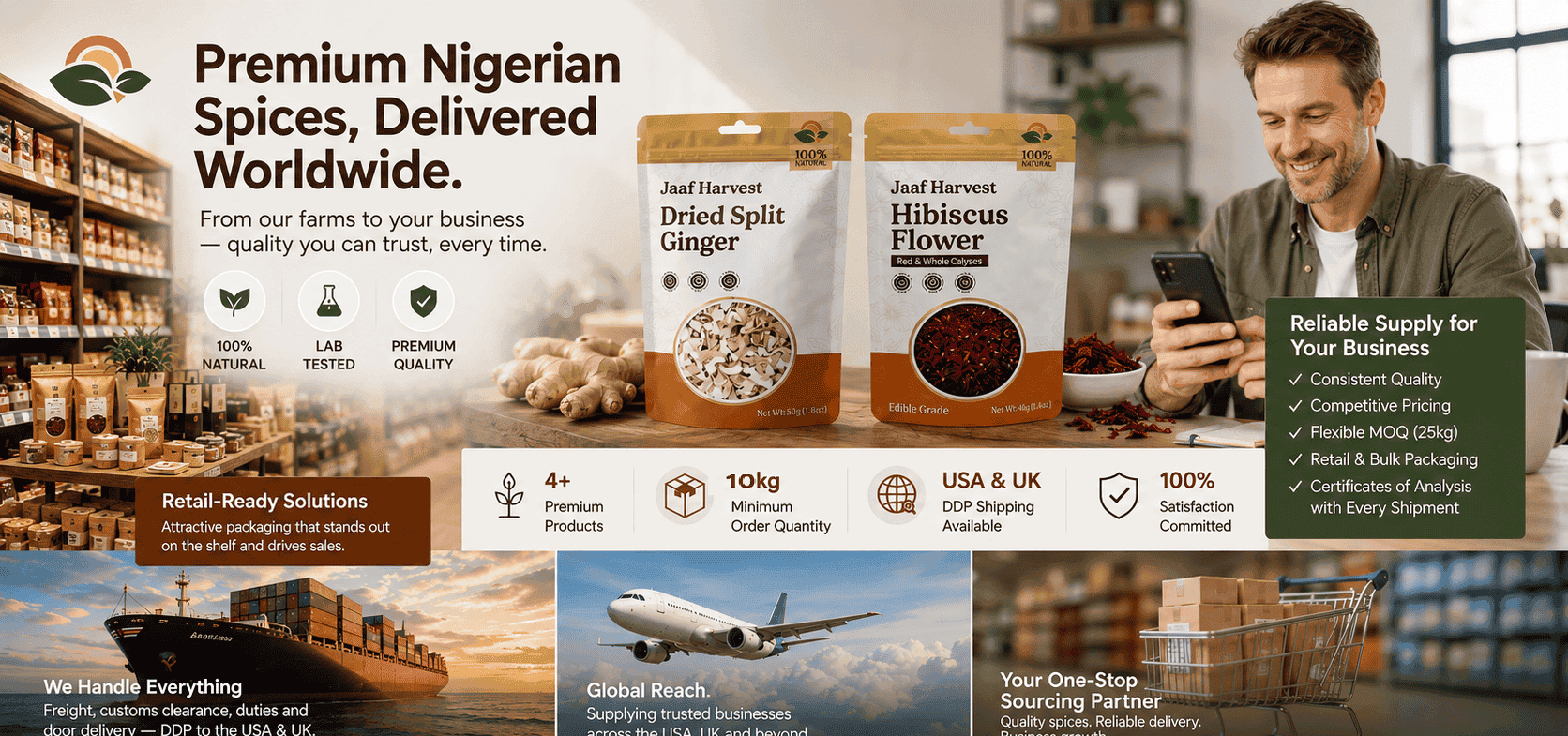
Jaaf Harvest provides lab-tested ginger, turmeric, and hibiscus – with retail-ready packaging, low MOQs, and DDP shipping to your door.
After Reading this retail shop owner’s guide, take the next step:
Download the Retail Margin Calculator – Free Excel tool. Enter your wholesale cost, choose your target margin (e.g 30-50%), and get your suggested retail price instantly.
Open a Wholesale Account – 10kg units mixed case. No application fee. No annual commitment.
Jaaf Harvest – Premium Nigerian Spices, Retail-Ready, Delivered to Your Door